
The first decade after the collapse of the USSR was very tough for most people — entire industries were wiped out or were sent into steep decline. For example, my mom had for many years worked at a publishing house called Raduga, where she was an editor of Mongolian translations of Russian literature. She went on maternity leave after I was born in 1989 and when it was time to return to work, her division at the publishing house was no longer there. There was no job to go back to. You see, Raduga was not a profitable publishing house, it was a state-funded cultural project that brought Russian literature in translation to other countries — not just other Soviet Republics, but all over the world: to Europe, Asia, Africa. And once the Soviet Union was no more, it made no sense to fund this project, so Raduga fell apart and a few industrious people who were running it privatized its luxurious historical building in the very centre of Moscow.
My mom officially had some shares in this newly privatized business, so in theory, she should have profited from the sale. But the director of Raduga — a real cunt of a woman — swindled her, and she got nothing. It was a common story repeated all over Russia at the time. The Red Directors got rich off privatization…some even became oligarchs…and everyone else was screwed over.
Anyway, publishing was not the only cultural industry that took a hit. The film industry, which had been generously funded by the state, barely survived. There were few movies — and very few that were memorable — made in the 90s.
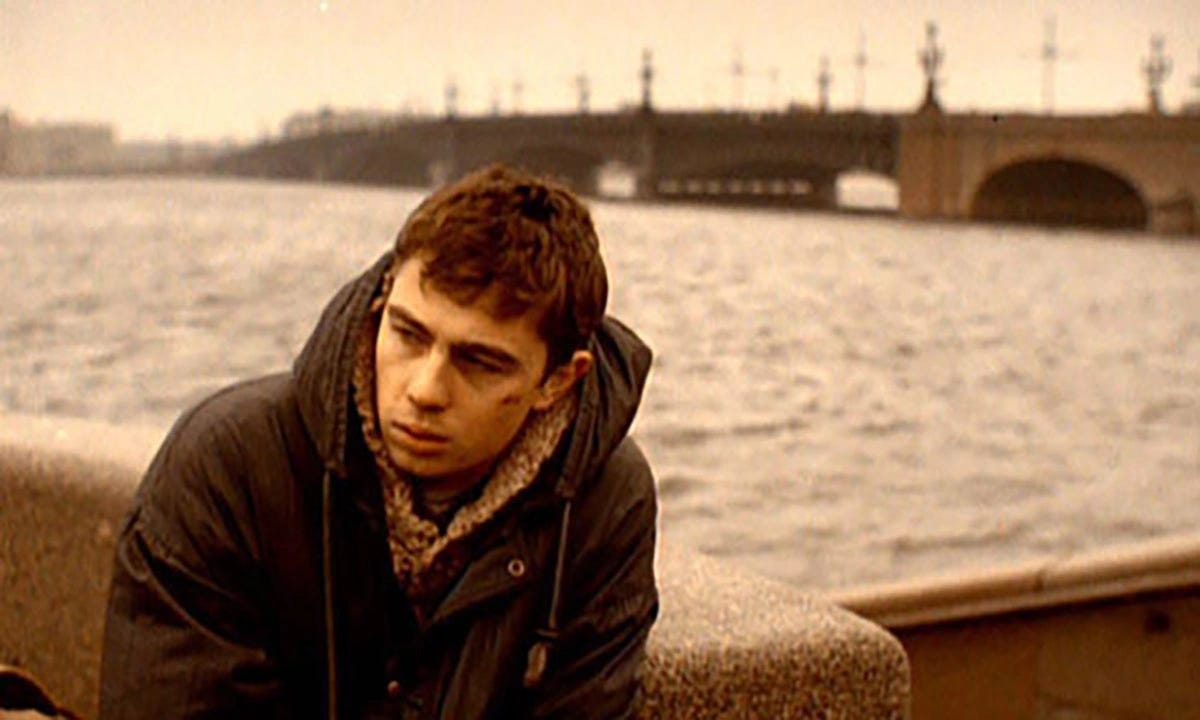
The director who probably captured the ethos of the 90s Russia best was Alexei Balabanov. With his film Brother, he unwittingly predicted that a Vladimir Putin type of character would come to power — or some say that Putin’s PR people molded his image after Balabanov’s main character, Danila Bagrov. Western cinephiles usually don’t know about Balabanov. His films are too “Russia coded”. They’re not perfectly tailored for export, not tuned to the aesthetics of the indie “foreign film” market that get screened at Cannes…like the movies of the widely beloved Andrey Zvyagintsev, who is sort of perceived as the heir to Tarkovsky (which is something I’d strongly argue against but I’ll save that for later).
I do believe that Balabanov is the main filmmaker and a dark poet of 90s Russia. He captured the aftermath of collapse so poignantly. No one could compete with the god’s fool, alcoholic genius Balabanov. But there were a few interesting — almost still social realist films — made in the 90s about the 90s.
Here are two of my favorite ones:
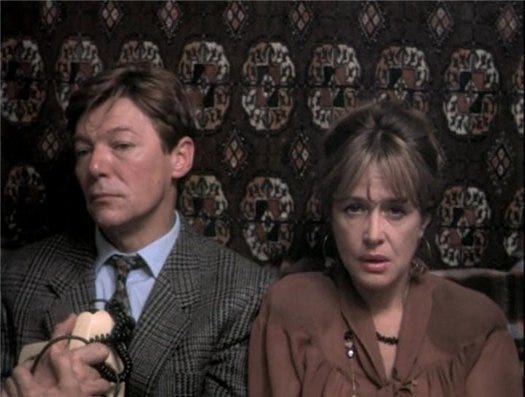
You Are My Only Love and Everything Will be Fine” by screenwriter/director duo Oleg Danilov and Dmitry Astrakhan are really interesting transitional films that show the conflict between the winners and the losers — the glossy, well dressed New Russians, the businessman and businesswomen and “the sovki,” simple Soviet people who couldn’t adjust to the capitalist transition, didn’t know how to play by the new rules of the market, and struggled with the new morality where everything was for sale.
The film You Are My Only Love came out in 1993 and was about a middle aged couple — engineer Evgeniy and sexologist Natalia — who along with an adult daughter live in a small studio apartment. They are together since high school and are still in love. An old friend of theirs, who had left with her family to America twenty years earlier, suddenly comes back to Russia from Los Angeles for work. She is a posh successful businesswoman now, and it turns out that she is still in love with Evgeniy and wants him to leave his wife and go live in America with her. There are echoes of A Pretty Woman here — but not only are the gender roles reversed but so is the moral question at the heart of the film.
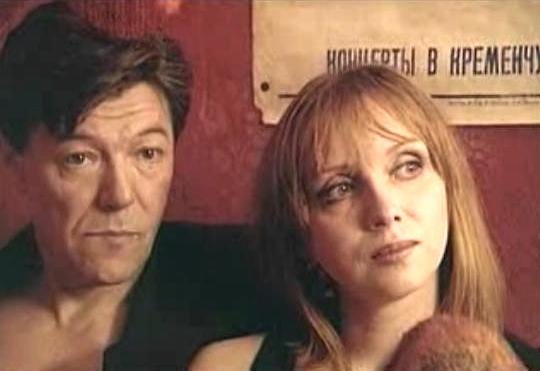
In Everything Will be Fine, which was released in 1995, the actor who played the engineer Evgeniy in You Are My Only Love is now a fabulous millionaire named Konstantin who lives in America and comes to visit his small provincial Russian hometown. He comes with his adult son Peter, who is a Princeton-educated math genius and a Nobel Prize winner. Konstantin meets the woman he used to love in his youth and who is now married to a “loser,” a talented musician turned alcoholic. Konstantin still wants to be with her. Meanwhile Konstantin’s genius son steals the cute fiancee of the “loser” husband’s son — a young guy who is just back from the army and is a kind simpleton, not a competition for a Nobel Prize smarty pants. So both Konstantin and Peter vie for the love of two women who they are ready to rescue from the depressing drab reality of post-collapse Russia and take them to America, which is presented as Elysium.
These two films are a bit sappy and sentimental and a bit formulaic. They were popular melodramas at the time. They are not nihilistic at all and in their naive still Soviet way they do get at the important moral questions of life in 90s Russia: If there are now winners and losers according to this new market ideology — what are you ready to sacrifice and compromise in order to join the winners? Do you even want to?
—Evgenia
I think many soviet films with English subs can be found here
https://sovietmoviesonline.com
Thanks, both of yours are new to me.
Barely fitting into the 90s, but my dad really loved Pavel Lungin's Taxi Blues (1990), it was basically a late Soviet Jarmusch film.
"A comedic love/hate relationship develops between a dour taxi driver and a hapless aspiring musician after the latter stiffs his cab fare."
Also Oblako Rai / Cloud-Paradise (1990), featuring Tolokonnikov.
"In a dreary Russian village, over-enthusiastic and underappreciated Kolya spontaneously announces that he has plans to leave for the far-east today, garnering far more attention and support than he anticipated."