
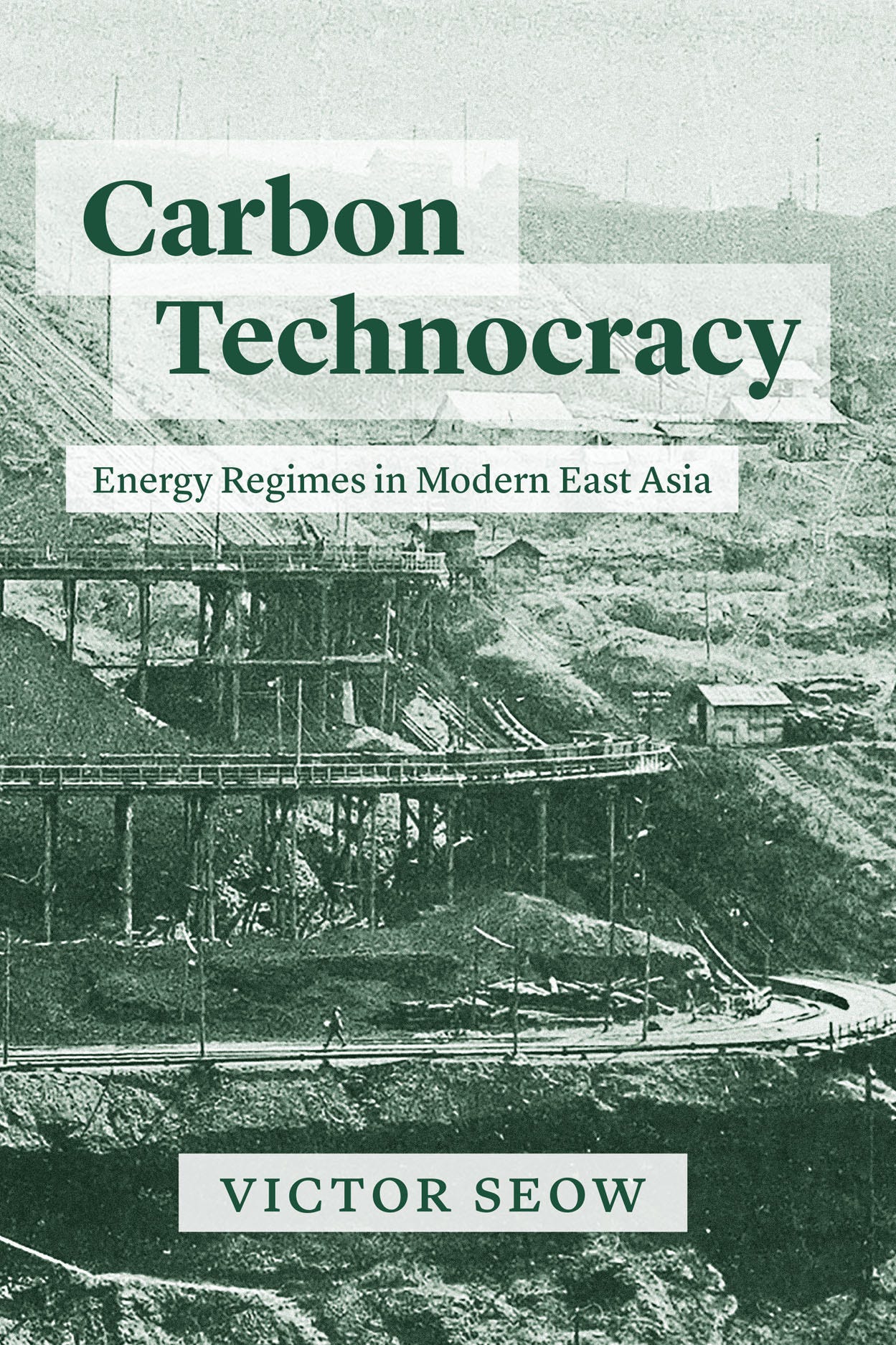
I started reading this nice book about the similarities of capitalist and socialist societies from a deep technological-political level. They are similar because both were built on top of coal and oil technology. And this technology—requiring a very certain type of technocratic structure—had a politics of its own that made the societies that depended on it more similar than different, regardless of whether it is the United States, the UK, Imperial Japan, the People’s Republic of China, or the USSR. They are all “carbon technocracies,” as this book argues.
This book addresses something that I, as an immigrant from the Soviet Union, have been thinking a lot about over the years. The similarity between the US and USSR. That’s why immigrants from the USSR like me and my family could so easily transition to a capitalist America. Or why Russians could transition from being communists to capitalists at the drop of a hat, with a capitalist Russia ultimately keeping many communist institutions intact in slightly reconfigured form.
This book isn’t about America or the USSR. It is about, primarily, China and Imperial Japan, which kickstarted communist China’s coal and oil technocracy in Manchuria (something I did not know). But really it’s about the bigger world in which we live. Because we all live in carbon technocracies — societies built on extracting and burning fossil fuels. And that’s why, despite regional variations and different types of control mechanisms for capital allocation, all our societies feel on a structural level very similar: China, America, Russia, socialist, capitalist…zoom out, and it doesn’t really matter that much. All are carbon technocracies. I’m pretty sure that if anyone studies this epoch in the distant future, the differences between capitalism and socialism will seem so slight as to be just a minor comment.
I’m not the first to notice that there is something mystical about the fact that our modern societies are built on these magical black rocks and goo made from compressed plants and animals that had lived millions of years ago, their life essence squeezed by massive, unimaginable underground pressures and forces, compressed into its concentrated form — a massive store accumulated sun energy sitting there in the deep dark, like a forbidden treasure. Clever primates that we are, we figured out how to dig it out, to harness it. This old concentrated life essence from deep, dark time has allowed us to expand the human population on a scale we have never before. It has allowed us to cover the globe in rocks and tar and plastic and fill our world with metallic gadgets. But this gift comes with a price: Use the gift too much and the spirits of the old ones, sitting in that concentrated goo and those black rocks, will spread around the globe and choke everything they touch. Those who don’t use it sparingly and wisely are doomed to destroy all life on the planet. You can look at it as a cosmic test of our species. And we’re failing it badly. Now we’re getting into carbon theocracy…
Anyway, nice book. I hope to get through most of it. But you know, with our stunted attention spans… Also, while I have you: Don’t forget to support Vampire Valley, the doc series I’m making about the internet and our industrial society. There internet — and now this AI push, which is very much a part of the internet — is peak carbon technocracy. The amounts of energy it requires are now outstripping available supply. We talked about this stuff a bit on our last ep, too.
—Yasha
Yeah but people in Russia think spiritually about food differently than people in the USA which is different than the people in Iran who believe food is only truly known if upside down.
While they all believe in spirits they can't agree on how spicy to take it. There is no one heat level - only one (or two) true god (s). or something - it's very complicated when you make things very complicated like this.
Everybody goes to gas, cause everybody gases - break the chain.
I wonder if you can frame this societal evolution the same way you did for the US / Europe increasing welfare for people during the Cold War - inevitable competitive pressure between Great Powers.