
Everything is mediated by algorithms now — the good and the bad; the malicious and the sublime. And that includes politics.
Everything in politics is mediated by platforms and algorithms and the massive corporations that control them: the voter outreach, the organizing, the prediction and modeling, the communication… Even politicians who go against the status quo, like Zohran Mamdani, depend on computer platforms and their algorithms to reach the masses and win elections. People think this is something new, but as far as politics go, we are now in a process that started almost 75 years ago — the better part of a century!
I want to go back in time to the first time that computers entered politics in a major visible way: the presidential election of 1952, which pitted Adlai Stevenson and Dwight D. Eisenhower.
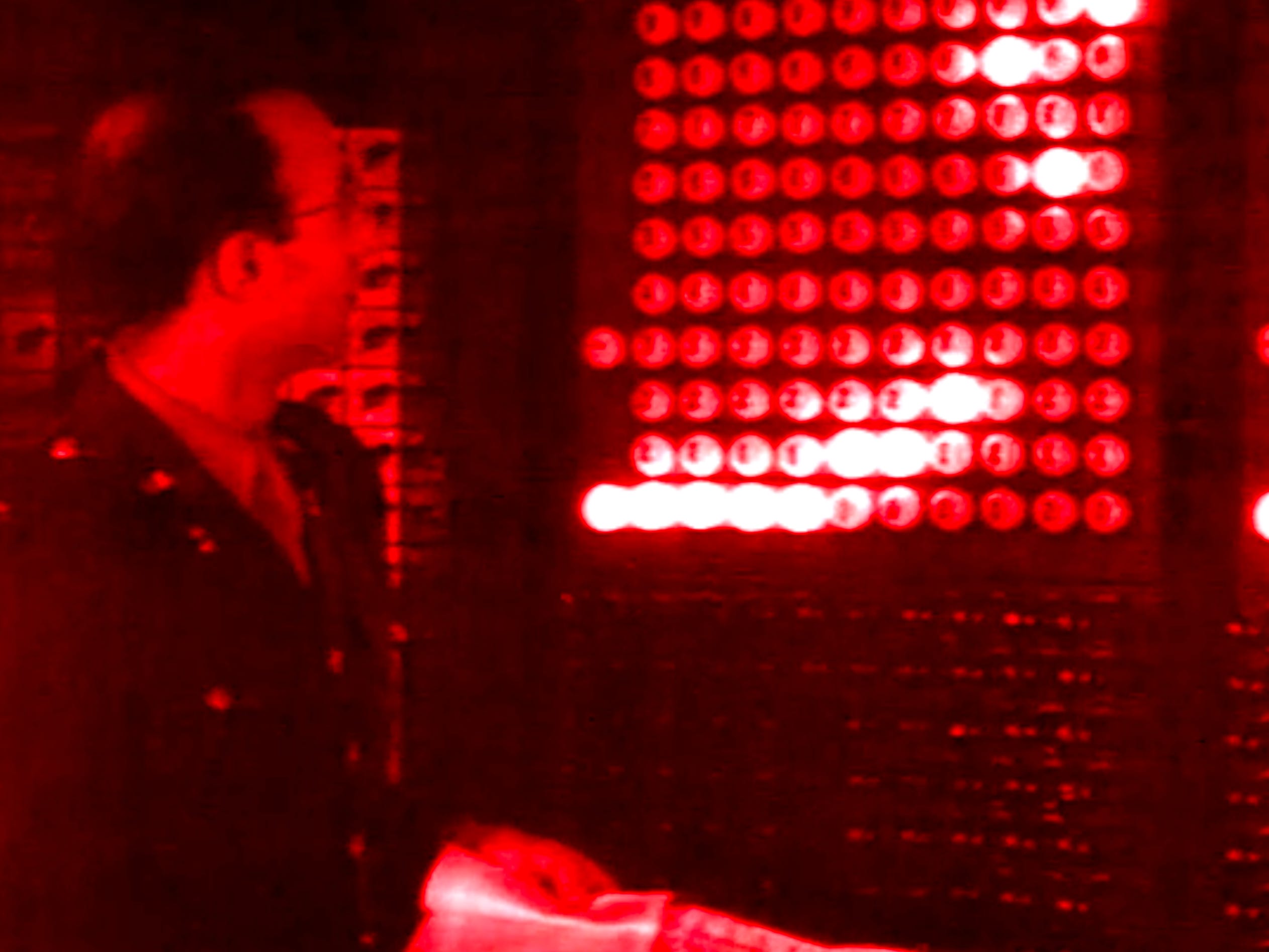
That year CBS made history by contracting with UNIVAC — an early computer company that came out of the U.S. Army — to do live on-air election result predictions, the kind of stuff that’s just done as a matter of fact by all the major networks now.1 Back then no one thought that a computer could do something as complex as predict election results. And even though the UNIVAC did correctly predict the election, the whole bit was done mostly for hype and ratings — a way to draw viewers to the network with a novelty (and a way to advertise this newfangled technology).
But even if it was initially a gimmick, it didn’t remain one for long. Because from then on computers and algorithms increasingly wormed their way into all parts of the political process — not just election day tallying but everything…even affecting how people thought about politics. Adam Curtis talks about this process in his work quite a lot.
Here are some clips about that moment in 1952 when computers entered politics:
I’m working on VAMPIRE VALLEY, a documentary about the internet. Help me make it! I’ll be sharing research and various clips with subscribers as I go along.
Any donation to the doc project over $100 automatically gets you a gift annual subscription to this newsletter! If you want to give, you can do so here or get in touch with me directly to make a larger tax deductible donation.
UNIVAC came out of ENIAC and ENIAC came out of…
From my book Surveillance Valley:
During World War II, the US military played a leading role in advancing the primitive state of digital computer technology. The reasons for this were many, and all of them central to the war effort. One was cryptography. The navy’s intelligence division, as well as several other predecessor agencies to the
National Security Agency, had long used specialized IBM punch card tabulators
to perform cryptographic analysis and code breaking. During the war, they were faced with advanced Nazi encryption techniques and needed machines that could work faster and with much more complicated code. Digital computers were the only thing that could get the job done. Other services were also desperate for machines that could carry out mathematical calculations at high speeds, but for a slightly different reason. During the war, powerful new cannons and field artillery rolled off production lines and headed out to the European and Pacific theaters. All this firepower was useless if it couldn’t be properly aimed. Artillery, big guns that can hit targets a dozen miles away, don’t shoot in a straight trajectory but lob shells at a slight angle so that they descend on far-off targets after tracing a parabolic arc. Each gun has a firing table that specifies the angle at which to fire so shells hit their mark. Firing tables aren’t simple, one-page sheets but thick booklets with hundreds of variables in the equations. The 155-millimeter “Long Tom” field cannon, one of the most popular big guns used during World War II, incorporates five hundred variables in its firing table. Air temperature, gunpowder temperature, elevation, humidity, wind speed and direction, and even soil type—all are important environmental factors required in the complex calculations.
Not surprisingly, these charts were treacherous to calculate. All the variables in hundreds of permutations had to be plugged in and worked out by hand. Mistakes regularly crept in and calculations restarted from scratch. Just one firing table for one type of gun could take more than a month to complete. And there were surprises: the army discovered that tables calculated to work in Europe didn’t work in Africa because the soil variables were different; though the guns were delivered, they were little more than dead weight until the firing data could be recalculated from scratch. Squads of clerks—usually women—worked around the clock using pen, paper, and mechanical adding aids to crunch the numbers. These women were called “computers” before digital computers existed, and they were incredibly important to the war effort. Firing tables were of such vital significance that both the navy and the army funded separate efforts to build automated calculators—all in the service of aiming giant killing machines—and helped develop the first digital computers in the process. Most notable among them was the ENIAC, built for the army by a team of mathematicians and engineers at University of Pennsylvania’s Moore School of Electrical Engineering…