
"Hey, ma! We big now! Oh wait..."
Pistachio Wars meets Vampire Valley
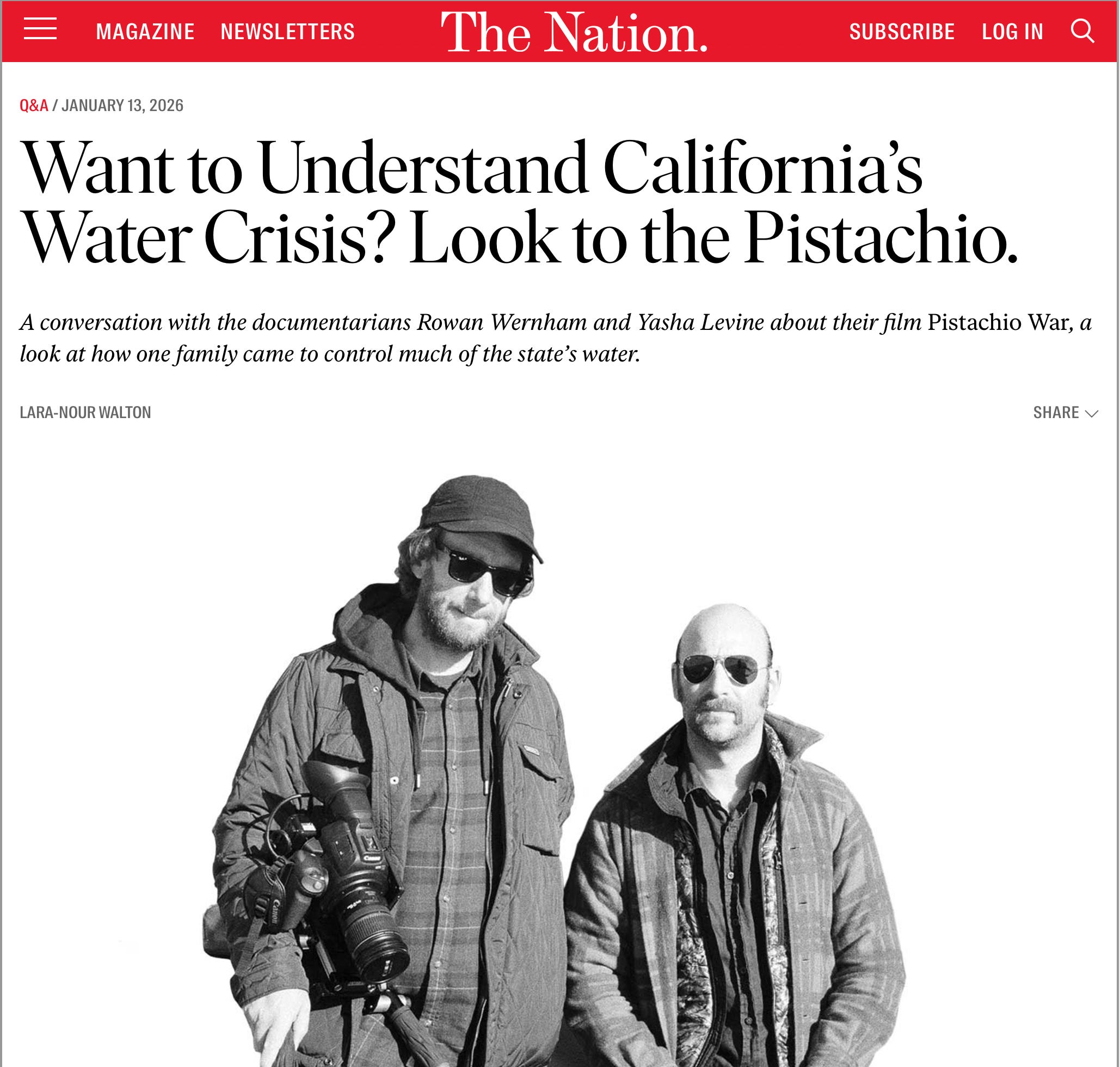
An interview with Rowan and me in the February print issue of The Nation magazine about our film Pistachio Wars — which you should watch. It’s a great interview, and I appreciate that Lara-Nour Walton talked to us.
Here’s a bit on the issue of ag and internal colonialism — and the absence of this issue from domestic left-wing activism. Most people know more (and seem to care more) about what’s happening in Venezuela than they do about what’s happening in, say, California, where they might live and have at least some power to change something. But it’s not sexy or exotic..it’s just mundane everyday exploration not far from where we all live.
LNW: The Resnicks have been lauded for investing heavily in their Central Valley worker town, Lost Hills. Most of the residents are employed by the Wonderful Company and many live below the poverty line near an oil refinery. What labor concerns does this raise?
YL: Lost Hills is an impoverished town with people essentially sick and having all these disorders, from breathing in dust, pesticides, and fertilizer, living right next to an active refinery—surrounded by oil wells and large scale corporate agriculture. They don’t even have access to clean drinking water. Meanwhile, the people who essentially own this town, who control the industry around it, live in one of the most expensive houses in Beverly Hills. Their house in Aspen was recently listed for $300 million. Barely any of that wealth goes back to Lost Hills.
RW: It’s a domestic banana republic.
YL: It’s exactly like a banana republic. It’s very imperial in the sense that a banana republic essentially presupposes that there’s this powerful entity, an empire of some kind, that uses the republic as a plantation where things are grown, people are exploited, and resources are extracted for the metropole. Los Angeles is kind of that imperial center. LACMA and the Hammer Museum benefit from the Resnicks’ generous donations. Already well-funded universities are getting a massive influx of money from them. And all that wealth is created by the people who live in Lost Hills.
The environmental degradation and labor exploitation are in a faraway region where many workers don’t even speak English, so there’s almost a racialized divide between the people who are Wonderful Company beneficiaries and those who work in the field to develop their wealth. The American empire certainly does bad things overseas, but the pattern is replicated domestically and my critique of some left, anti-imperial politics is that it very rarely looks inward.
Thinking about the interview, though, I can’t help but notice something about our new media landscape. Back in the day, us getting featured in The Nation would be a major achievement. A long interview like this one in such an august publication would generate some kind of media and political interest — or, at the minimum, it would generate emails from readers. Now it gets nothing. It falls into the primordial mass that is our mediascape — a mass of info that’s constantly and getting denser and denser while our capacity for interacting with shrinks and shrinks. I get the sense that we already passed some kind of critical point. The whole notion that we live in the golden age of a democratized new media powered by the internet has ceased to have any reality attached to it. People still do believe it. And yet on the backside, Vampire Valley has created a technology where unlimited access to information has been weaponized into a tool of pacification and control. The zone has been flooded. The power of knowledge has been neutralized. The only media events that have any real power are ones boosted by powerful institutions in coordinated psyops, and even they have a short half-life.
So, yeah, check out the interview. And also take a peek at the other great ones we’ve done for Pistachio Wars. I don’t think I ever sent them out. Knowledge is still worth something, and I appreciate people taking the time to talk to us and to learn.
The Baffler: “Water on the Brain” by Steve Macfarlane. (my personal favorite)
Hyperallergic: “The Museum Donors Accused of Sucking California Dry” by Dan Schindel.
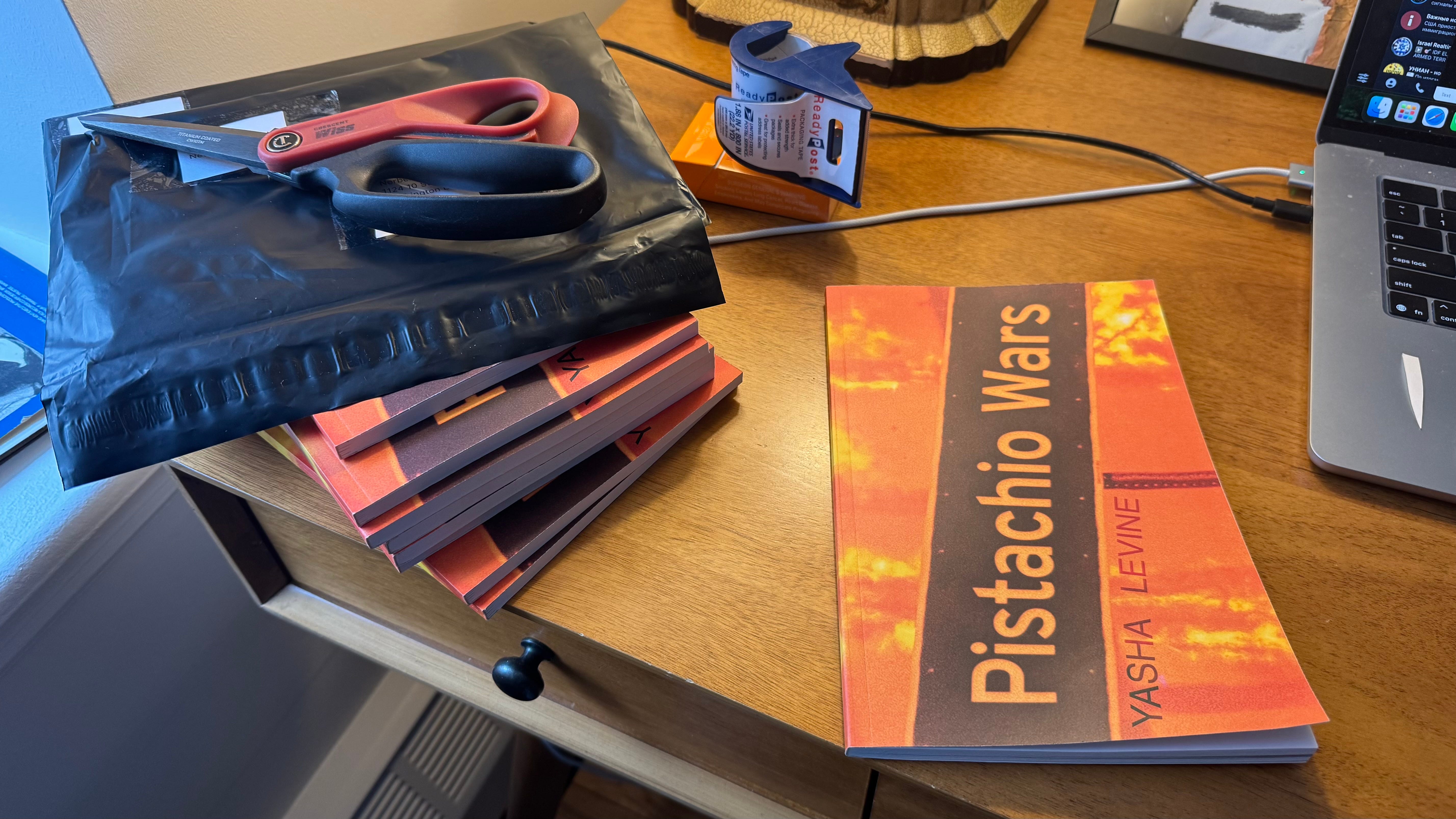
And while I still have you… I’m doing the background research on my doc about the internet. Chip in if you can and haven’t already. I’m sending out the first batch of signed books to supporters as soon as the post office opens up next week. Get yours while supplies last! And send me an email if you want to give tax deductible donations to the project. I just set that up. Thanks!
—Yasha
The refinery aspect sounds ominously similar to the Guggenheims’ lead/arsenic/cadmium producing smelter in Tacoma Wa (https://www.lrb.co.uk/the-paper/v47/n20/james-lasdun/american-berserk)