
Are most content creators drug addicts?
I’ve been thinking through my own history of drug use, and an obvious question popped into my mind: Are most content creators drug addicts? I mean, the business is practically designed to attract and create addicts. The internet and social media are real addictions in and of themselves. It isn’t just the people who consume the “content.” The people who make the stuff are just as addicted — possibly more so. Front and center is someone like Taylor Lorenz, who admits to spending 17 hours a day staring at her devices — SEVENTEEN HOURS! Wired, indeed!
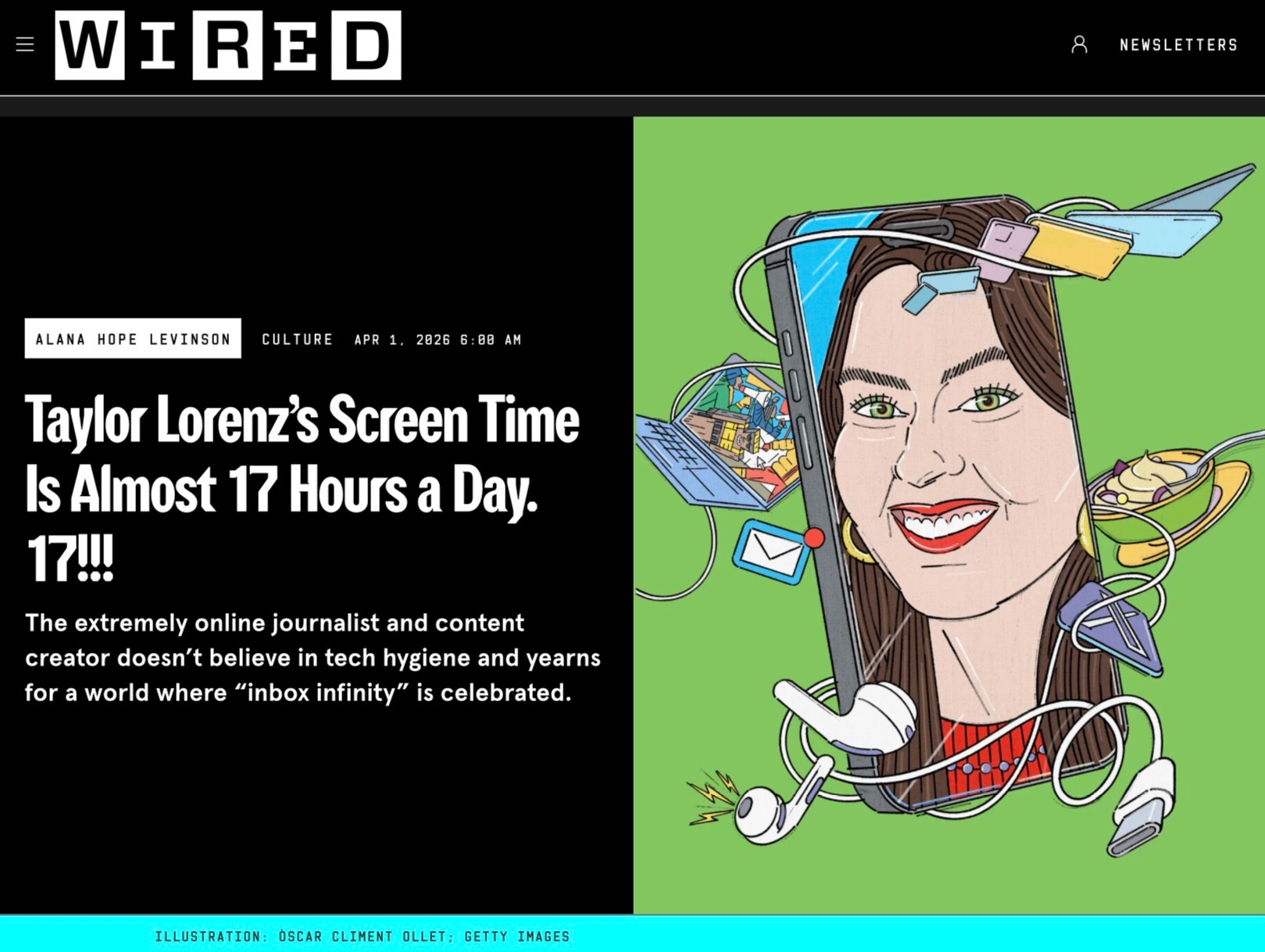
Yes, social media addiction is a massive problem in and of itself for the increasingly whipped-on creator class. But what I’m referring to here is regular drug addiction. The people who make internet content seem primed to be addicts themselves. Just the nature of the content economy — the social isolation, the brutal non-stop always-on churn that it requires, the vampiric nature of the work, the whiplash emotional highs and lows of the publishing cycle — demands that you either have an obsessive/workaholic personality and/or you develop a massive drug problem: Uppers for keeping up with the workload — churning out new content, engaging the comment army, keeping up with subscriber threads. And downers for unwinding at the end of the day. From what I’ve seen personally among people in the news industry, pretty much everyone’s hooked on some sort of upper — Adderall or Ritalin. And as any drug user knows, uppers are always paired with something that helps you chill out at the end of the day: xanax, valium, alcohol, ambien, painkillers…. It’s pretty much an open secret as far as the news world goes: most people are speed freaks. They don’t call them news junkies for nothing! But I’m wondering how much wider the problem is in the content creation industry more broadly. I mean, the pressures of the internet content factory are just immense — the competition for people’s attention is a brutal zero-sum game that’s nonstop in its intensity, regardless of whether you’re doing fashion or gaming or political TikToks.
If levels of addiction among general content creators are anywhere close to those of the news world that I have some personal experience with, it brings up a corollary concern: Since so much of our culture is internet/social media now, does that mean culture is now overwhelmingly created by actual drug addicts? If you stand back and look at it, it does seem that way, doesn’t it? The tone of culture on the internet has a distinctly drug addict vibe: hyper-focused, manic, juvenile, superficial, amnesiac, full of tantrums and fleeting obsessions, constantly bouncing between elation and depression and rage and fear and denial. In that sense, the internet itself has become an addiction technology where all content is created by addicts for addicts. As a friend of mine who’s dealt with his own addiction problems wrote me, “You’re right. The whole content-creation industry basically reflects substance addiction almost perfectly: craving, the fleeting high, the inevitable letdown, and then the compulsion to begin the cycle again. And that applies both to the people producing the content and the people consuming it.”
It’s frightening. It seems like this is not a minor thing that should be swept under the rug, but a central issue at the core of what ails society. Democracy? Progress? What do any of these things mean when the engine of our mass media society is a giant addiction machine, dedicated to creating addicts and maintaining the addiction cycle? Society has waged and won an Opium War against itself and is now going all out. Everyone is a victim — all classes…the workers, and the factory owners.
And speaking of wars, the internet itself was born out of warfare — developed by the Pentagon as a counterinsurgency weapon during the Vietnam War Era. This technology went commercial in the 1990s, merging into an atomized society that had long replaced any sort of social meaning and connection with atomization, consumerism, and addiction. So it makes sense that the internet slotted right into this pattern. Well, it didn’t just slot in — the technology was such that it drove the addiction machine into hyperdrive. There are positive elements to this technology, no doubt about it. But the vast bulk of its effects are not. It atomized us even more; made us even more lonely; removed us from our bodies, each other, and our physical surroundings; and then offered us something that promised to ease the pain: itself, the addiction. And this addiction machine is itself being fed by addicted content creators, a hopeless loop of addicts drawing in addicts and presenting it as meaningful connection, empowerment, etc. It’s brutal.
Something has to change, and the change has to come from your personal initiative. The system won’t reform itself because the entire system is predicated on keeping the addiction going. It doesn’t even matter what the underlying politics are any more. At the base of everything, right and left, is the addiction machine.
—Yasha
David Foster Wallace saw it all coming 30 years ago ... sigh .... "Infinite Jest" is getting more REAL every day ....
incidentally, Taylor has been going off on X recently about how social media / online "addiction" isn't real — it's just a "maladaptive behaviour." okay!