Ancient Soviet wisdom can help you thrive during American decline
the first collectivist self help manual

We here at NEFARIOUS RUSSIANS have been speaking and writing about American decline. It’s hard to not notice the signs. The procession of senile heads of state, top-level corruption, pointless wars, wide-scale cynicism, soaring costs of living, an insulated and parasitic elite involved in the pursuit of fantastic projects — like their attempts to build all-powerful AI slaves to replace the unstable mass of humanity underneath them.
The decline is noticeable everywhere. Americans are increasingly moving abroad or dreaming of moving, and millions watch videos of Chinese high-speed trains and modern infrastructure with disbelief and longing. “Why can’t we have this here?” It reminds us of the way Soviet people dreamed of moving abroad; the way they salivated over American cars and blue jeans.
Yes, as immigrants from another collapsed society, we see you Americans and try not to enjoy the schadenfreude too much. In fact, we empathize with you enough to offer a practical manual to survive and even thrive during collapse. We’re drawing on ancient Soviet wisdom for self-help — wisdom we didn’t know was worth very much until recently!
We have experienced collapse in our own ways. Yasha’s early childhood was in the last decade of Soviet Leningrad. Memories of food shortages and empty grocery stores and abandoned construction sites. His parents, even though they had decent, stable jobs and their own new apartment, believed so little in a Soviet future that they decided to flee the country as if they were running from a war zone, thinking that it was better to plunge into the unknown and even live in refugee camps and start all over at 40 with two kids than to remain at home. That’s how little faith they had in their own country. Yasha had relatives and family friends who stayed and lived through the collapse. His cousin became a mail-order Russian bride, his childhood friend’s sister became a prostitute, the next-door neighbor kid he used to play with got hooked on heroin, fell under the train, survived but got his legs cut off, and eventually died of AIDS.
Evgenia was born a few years before Boris Yeltsin dissolved the USSR, and she grew up in a truly collapsed society — among rampant cynicism, a nonexistent government, Moscow run by thugs and mafia, makeshift markets selling cheap Chinese goods as if Moscow was a shantytown, a “tochka” where women sold their bodies not far from her apartment, and a class of carnivalesque New Russians zooming around in Range Rovers and blowing through money at expensive restaurants and casinos. It was surreal — like living through the reverse of the Russian Revolution. Turned out that this shock privatization was as painful for people as collectivization was. So the people suffered again, while a tiny minority enriched themselves and bohemians enjoyed freedom of speech, the lifting of censorship, and freedom of travel.
We look at what’s happening here in the United States and can’t help but feel empathy. We’ve lived through collapse. We were formed by it. We’d like to help. This upcoming event on June 7th in NYC is about.
KGB Bar: Red Room. June 7th at 7PM.
Use ancient Soviet wisdom to help yourself thrive during decline.
Space is limited so buy tickets in advance!
We’ll have a special edition how-to manual available for sale, too.
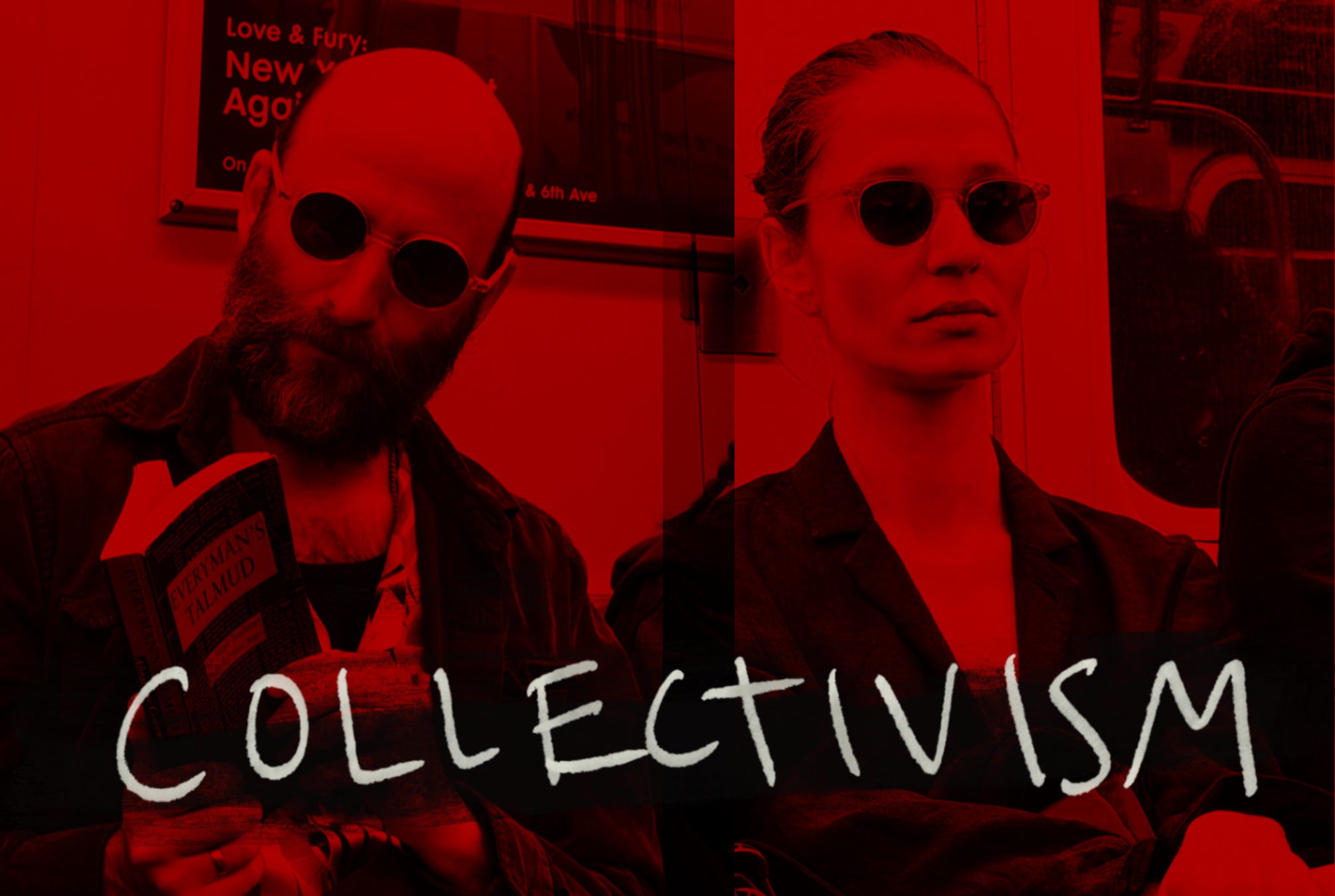
To us outsiders, to people who came from a more collectivist society, we see that one of the biggest weaknesses of American society is the cult of individualism that has been pushed on everyone here.
Individualism is one of the most powerful myths in America. It’s basically enshrined as one of the main divine laws of the land — “Be Selfish” might as well be the 11th Commandment here, handed down by Moses and ratified by Jesus Christ. This myth has made individualISM synonymous with strength and vitality. Being selfish and self-reliant is like rock that can’t be broken: cowboys, tycoons. This is the idea pushed by another Russian immigrant, Ayn Rand. The strength of the individual vs the weakness of the collective.
And when society is stable, institutions function, and things more or less work as promised, individualism seems to work. You can go out there and make money and then buy things that you need to survive. You don’t need to lean on friends or family or your community; you can just tap the commercial market for goods and services: nannies, movers, shrinks… They are all there for you to buy. Transactional relationships take up all the space and are seen as normal while friendship remains decorative and aloof. You are not supposed to impose on people or ask them to help — you don’t want to be a drag and you don’t want friends to be a drag either.
Americans have been psyopped into thinking that individualism is a strength. But we see it differently: Individualism is fragility. Individualism depends on impersonal institutions — you become dependent on a job and market for everything, even things that shouldn’t be commercial. And if those institutions fail or you lose access to them, your whole life will come crumbling down. Real strength lies in collectivism — in cooperation with other people. TaskRabbit is not cooperation, but the opposite of it. Paying someone $20 to install your shelf is psychotic, not normal and efficient.
The thing to remember is that America’s cult of individualism is a historic aberration. It came out of a very particular period of American history. It’s a product of the post-WWII economic boom and the need for a countervailing ideology in America’s fight against communism. Individualism is largely a psyop, foisted on Americans through films, books, even art. And this individualistic society is very fragile. Its survival depends on post-WWII institutions — institutes that, paradoxically, are rooted in socialistic principles. And when these institutions begin to implode, so will individualism. Material conditions will force people to abandon individualism one way or another. And as things get progressively worse, people will have no choice but to embrace a collectivist mode of living. This psyop won’t survive collapse.
And that’s a good thing. Collapse isn’t only bad. There are positive elements, too. Along with hardship and struggle, it’s a time for renewal and reconfiguration. There’s freedom from rotten institutions and toxic societal expectations, and a chance to remake society. It’s good for art and anyone doing anything creative. And for others, it’s a chance to get out of the dead-end bullshit corporate jobs and do something meaningful with their life. Don’t be scared. It can be liberating.
So come out on Sunday June 7th.
A bad NEFARIOUS RUSSIAN tricked you poor Americans into cruel Objectivism. So it’s up to a couple of good (and much better looking) NEFARIOUS RUSSIANS to teach you to be Collectivist again — and collectivism is the most natural state of man.
KGB Bar: Red Room. June 7th at 7PM.